Former Minister Claims Army Chief ‘Betrayed’ Sheikh Hasina as Intelligence Agencies Failed to Warn: What It Means for Bangladesh’s Ongoing Crisis
Dhaka, November 2025 | By Staff Reporter
A statement attributed to former Home Minister Asaduzzaman Khan Kamal has ignited fresh debate about the role of Bangladesh’s security establishment in the country’s prolonged political turmoil.
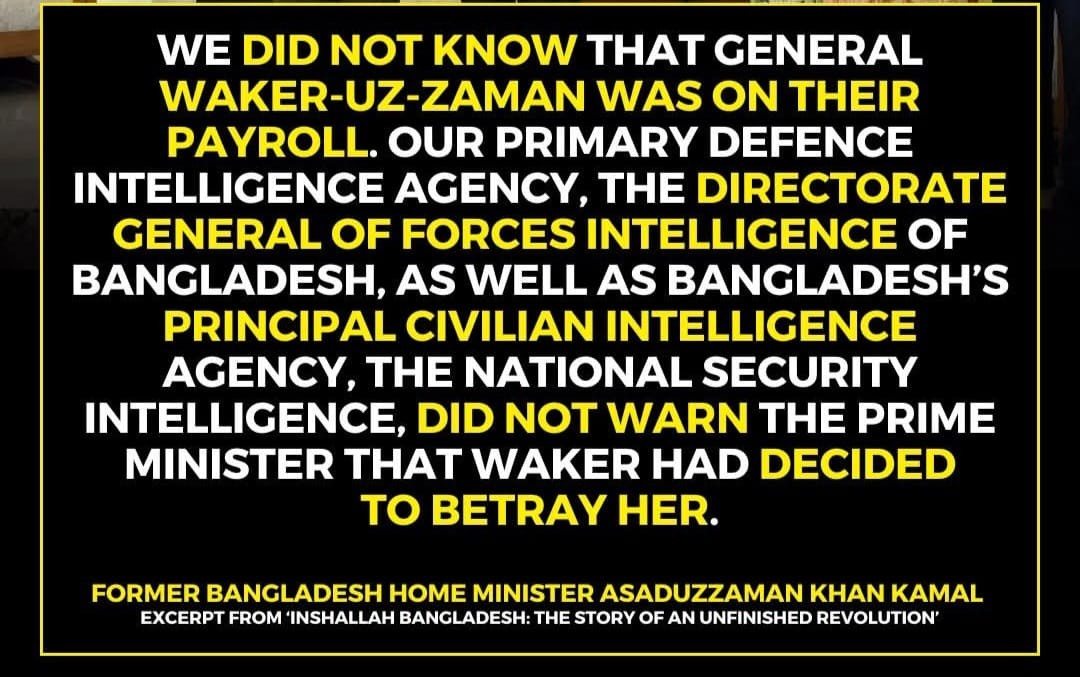
In a widely circulated quote reportedly taken from “Inshallah Bangladesh: The Story of an Unfinished Revolution,” the ex-minister says:
“We did not know that General Waker-Uz-Zaman was on their payroll. Our primary defence intelligence agency, the Directorate General of Forces Intelligence (DGFI), as well as the principal civilian intelligence agency, the National Security Intelligence (NSI), did not warn the Prime Minister that Waker had decided to betray her.”
Although the authenticity of the excerpt has yet to be independently verified, its message has already added tension to an already fragile national atmosphere following months of political upheaval.
Background: The Rise of General Waker-Uz-Zaman
General Waker-Uz-Zaman formally assumed command of the Bangladesh Army on June 23, 2024, succeeding General S.M. Shafiuddin Ahmed. A career officer with extensive UN peace-keeping experience, he previously served as Chief of General Staff and Principal Staff Officer at the Prime Minister’s Office.
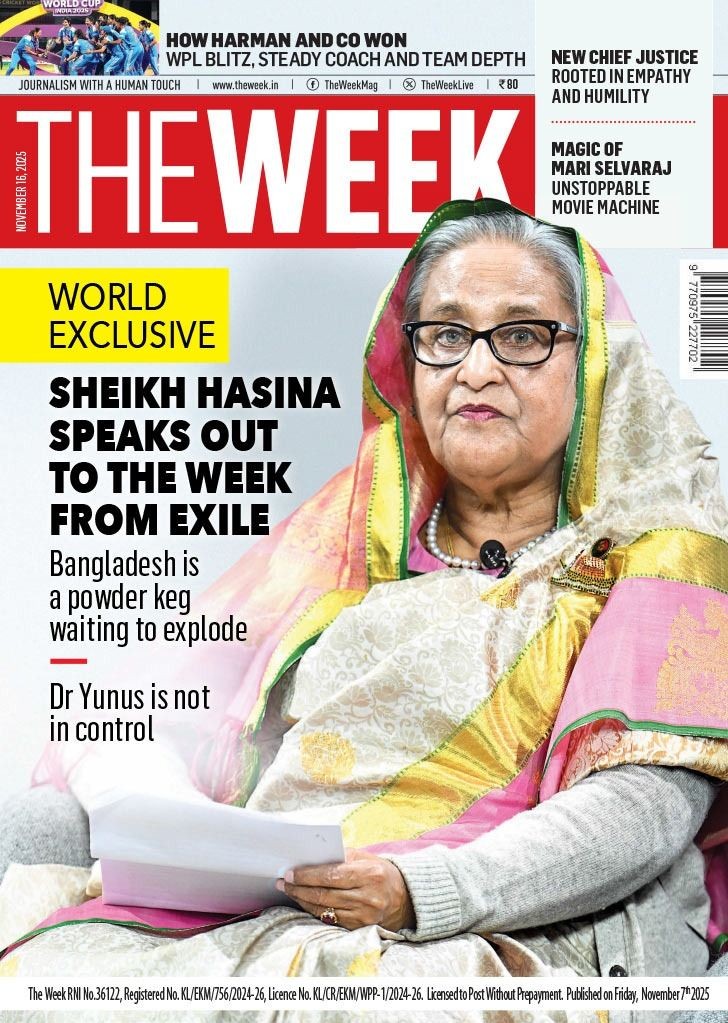
His appointment came amid growing unrest, street protests, and calls for political reform. Two months later, as unrest peaked, Prime Minister Sheikh Hasina resigned and reportedly left the country—an event confirmed by international outlets including The Guardian and Reuters.
Subsequently, the army pledged support for an interim government led by Nobel laureate Muhammad Yunus, which promised elections within 18 months.
The Allegation: A “Failure of Intelligence”
Kamal’s alleged remarks accuse both the DGFI and NSI—Bangladesh’s top military and civilian intelligence agencies—of failing to inform the government that the army chief had “decided to betray” the Prime Minister.
The claim implies that elements within the state’s security apparatus may have acted outside the constitutional chain of command or withheld critical information from civilian authorities.
If true, such an internal breach would signal a major collapse of coordination between the country’s security services and the elected government.
However, no official confirmation or response from the DGFI, NSI, or the army has been issued regarding these allegations.
Foreign Influence and Speculation
The statement’s use of the phrase “on their payroll” has led to rampant speculation about possible foreign involvement, including unverified claims of external intelligence influence.
While some online commentators have linked the remark to alleged Western—particularly CIA—involvement in Bangladesh’s recent political shifts, no credible evidence or mainstream reporting supports such theories.
Experts caution that foreign-influence narratives often thrive in times of national crisis and should be evaluated carefully against verifiable facts.
Civil–Military Relations Under Strain
Bangladesh has long maintained a delicate balance between civilian government and military influence. Analysts note that the August 2024 transition, following Sheikh Hasina’s resignation, raised questions about whether the military acted as a neutral stabilizer or as a political actor shaping the transfer of power.
“The line between guardianship and governance becomes blurred when the military steps in to ‘ensure stability,’” said a South Asian security analyst based in Dhaka. “This latest claim, if proven, would confirm that civilian oversight of the armed forces had already broken down before the leadership change.”
A Deepening Crisis
The controversy surrounding the former minister’s claim underscores the fragility of Bangladesh’s civil–military relations and highlights how competing narratives—ranging from betrayal to foreign interference—are shaping public discourse.
Political analysts warn that without transparency, accountability, and credible elections, these allegations could further polarize the nation.
For now, Bangladesh’s future depends on whether the country’s institutions can rebuild trust—and whether its leaders, both civilian and military, can restore a sense of constitutional order amid deep uncertainty.
Sources:
The Guardian, Reuters, The Daily Star, bdnews24.com, ISPR Bangladesh
Verified public profiles of General Waker-Uz-Zaman
Excerpt attributed to Asaduzzaman Khan Kamal in Inshallah Bangladesh: The Story of an Unfinished Revolution